|
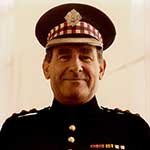
Colonel I A Ferguson LVO OBE
Late Scots Guards
by Major General D M Naylor CB MBE DL
formerly Scots Guards
|
Iain Ferguson probably spent more than half of his thirty years Army service in the Scots Guards or Household Division appointments; he commanded a rifle company in both battalions, was Adjutant of the 2nd Battalion to Adrian Seymour in 1959 and second in command to Murray de Klee in the 1st Battalion in Sharjah in 1970. In addition, he served on the staff of 4th Guards Brigade and twice in HQ London District. He commanded the Guards Depot at Pirbright in 1972 when he became known to generations of future guardsmen, both permanent staff and recruits, while finally commanding the Regiment in 1978. Interspersed with his time at regimental duty, he served in the wider Army and at one stage was MA to the CDS in the MOD.
Iain was born in May 1932 and was aged ninety-three when he died on 2nd December 2025. His father, John, fought in World War One and subsequently served as a senior police officer, being actively involved in home defence in the early years of the Second War when he advised government about measures to guard against a German invasion of the South Coast in 1940/41. Iain lived through those war years, subsequently attending Wellington College and RMA Sandhurst before joining the 2nd Battalion in 1952.
Iain was a delightful man, possessed of a lovely sense of humour and with a great interest in people which of course made him a very successful leader. He was popular with his contemporaries, well known and respected across the Regiment, not afraid to confront authority when he felt it necessary and unequivocal in defending those he commanded if he felt they were being wronged. He and Margaret, his wife of seventy years, were a devoted couple, good company and always fun. They married before going to Kenya in 1955, long before the age approved by the Army, when Iain volunteered for overseas loan service. Despite being denied by the rules a married quarter or allowances, they spent three years in East Africa when Iain served with the 5th Battalion King’s African Rifles as a platoon commander. Soldiering in Kenya involved various operational deployments mainly in the Northern Frontier District, low level military skirmishes with neighbouring countries and the need at times to resolve difficult issues at platoon level because there was no one else to do so. Serving in Kenya at the time was Michael (Bwana) Scott, also Scots Guards, who became a lifelong friend as did their wives Jilly and Margaret. The four remained in close contact for the rest of their lives often thrilling others with tales of their experiences of serving in the final years of the Empire.
Iain was unlucky not to command a Scots Guards battalion but was selected for the Guards Depot instead; because the 2nd battalion had recently been placed in suspended animation career prospects had changed and Iain nearly missed out altogether; it must remain conjecture but maybe the Army obtained more value from Iain at the Guards Depot than it might have done in a command elsewhere; his own feelings are unknown but he would no doubt have been disappointed. His final appointment as Regimental Lieutenant Colonel saw a Royal Review of the Regiment in 1979 followed by the Queen’s Birthday Parade when Iain commanded the 2nd battalion on Horse Guards. Thereafter he retired in 1982.
Iain was always a creative spirit which combined with a certain artistic flair and a deep knowledge of horticulture gave him plenty of scope after the Army. He was an expert on lilies, became involved with the Royal Horticultural Society and, when he went to live near Newmarket, developed a lovely garden at Ousden. However, when the appointment to be the next Commandant of the Royal Tournament at Earls Court - that annual parade of the armed services’ roles and skills which presented the opportunity to showpiece to the nation what military service involved whilst also encouraging recruiting - was offered to him Iain almost instantly accepted. He was in his element and used skills learnt elsewhere to keep the show going for several years. Sadly, towards the end of his time politicians decided that for reasons, mainly financial, such a show could no longer be justified; a decision which doubtless saddened Iain who had spent so much time and effort to perfect the annual performance.
Once finally established in Suffolk Iain developed a close interest in Bloodstock. His elder son, John, was a prominent figure in the racing industry either as a trainer or an adviser to owners, living at home or overseas, who used Newmarket as their base. Iain equally interested himself in racing matters and enjoyed working with his son in determining and plotting form.
Active to the end despite acute physical pain in his legs, Iain remained as good humoured and friendly as always, enthusiastic to know the Regiment’s doing, welcoming of old friends who travelled to see him and invariably cheerful. At his thanksgiving service attended by a large congregation, Douglas Erskine Crum, a platoon commander in one of Iain’s companies, concluded his eulogy by describing Iain as ‘top man’, a most appropriate epithet. |
|